

The Hidden Monopoly Silencing Our Valley: How One Company Controls the Narrative in Yampa’s Local News
One script, written hundreds of miles away, shared by the same handful of reporters, and carefully edited to keep the biggest advertisers smiling.
Written by | Trenten Kelley
The heart of northwest Colorado, where the Yampa River winds through ranchlands and resort towns, a quiet crisis is unfolding in the very stories we read about them. As a local resident who’s watched our communities grapple with massive developments like the proposed Stagecoach Mountain Ranch. For those unfamiliar, it is a billionaire’s private ski enclave that threatens to reshape South Routt and more than likely have a snowball effect on surrounding communities.
I’ve come to a startling realization. The two main newspapers covering our area, the Steamboat Pilot & Today and the Craig Press, are owned by the same corporation. A monopoly that homogenizes our news, stifles diverse voices, and prioritizes advertiser-friendly narratives over hard-hitting journalism.
What started as a personal frustration, “why do these papers seem to gloss over the deep divisions and environmental risks of projects like Stagecoach?” Led me to uncover a web of corporate control.
Swift Communications, now a division of Ogden Newspapers, owns not just our local outlets but a dozen others across Colorado’s mountain towns. This consolidation has turned what should be competing voices into echoes of the same script.
The Rise of a Media Empire in the Mountains:
Swift Communications began modestly in 1975 with a couple of small papers but grew through aggressive acquisitions, targeting resort-heavy markets like ours. In 2016, they snapped up the Steamboat Pilot & Today and Craig Press in one bundle, effectively eliminating any real competition in Routt and Moffat Counties.
Fast-forward to 2021, when Ogden Newspapers, a family-owned chain with over 50 dailies nationwide, acquired Swift’s assets, centralizing operations further. Today, these papers share reporters, editors, and even a “Western Slope Regional Reporting Team” that feeds content across titles, ensuring uniformity.
This isn’t speculation, it’s documented in their own archives. When Ogden’s purchase was announced on November 30, 2021, the headlines and stories across Swift papers were near-identical clones:
• Steamboat Pilot & Today: “Pilot & Today’s parent company sells to West Virginia-based Ogden Newspapers”
• Craig Press: “Ogden Newspapers purchases Swift Communications”
• Vail Daily: “Parent company of Vail Daily sells to Ogden Newspapers”
• Aspen Times: “Parent company of Aspen Times sells to Ogden Newspapers”
The core text? Verbatim: “Founded in 1975, Swift Communications has operated magazines, newspapers, websites… In Colorado, that includes…” followed by the same list of papers and a quote from Swift’s CEO about “passing the baton.”
This cookie-cutter approach isn’t limited to corporate news, it’s the blueprint for how they cover everything from housing crises to wildfires.
Echo Chambers in Print: Uniform Headlines and Narratives
Dig deeper, and the patterns scream monopoly. On the Stagecoach proposal, a 6,100-acre luxury development by Discovery Land Co. that could double local households while exacerbating water woes and housing shortages, coverage across Swift papers reads like a shared press release.
Headlines from late 2024 emphasize delays and “procedural snags” with a pro-growth spin:
• Steamboat Pilot & Today: “Discovery Land Co. proposal for Stagecoach ski resort delayed by commissioners” Highlights such as “public benefits like jobs and infrastructure.”
• Craig Press: “Routt County tables Stagecoach 1041 permit hearing” Echoes the same developer quotes on “economic boost for South Routt.”
• Summit Daily News: “Private ski area near Steamboat faces scrutiny in county review” this mirrors the structure, touting “promised amenities and tax revenue” while soft-pedaling opposition.
Compare this to independent reporting from Aspen Journalism, which dives into resident fears of “21st-century colonialism,” Yellowstone Club lawsuits over pollution, and the inadequacy of 137 workforce housing units.
Swift papers? They bury those angles, framing critics as mere “concerns” amid glowing mentions of new trails and a grocery store.
This uniformity extends to other issues sensitive in the community like say, housing. Headlines like “Routt County workforce housing gap widens amid tourism boom” (Steamboat Pilot) and “Eagle County faces housing crunch as resorts expand” (Vail Daily) both pivot to “solutions in the pipeline,” completely ignoring displacement and effects to the valley.
Why? Advertisers, real estate firms, chambers of commerce and resorts hold sway. Former editors have called Swift “the only game in town,” with 90% market share in areas like Eagle County, allowing inflated ad rates and narrative control. Staff cuts post-acquisitions (20% in 2008, more after Ogden) mean fewer local reporters, more centralized editing from hubs in Denver or Reno.
The Real Cost: A Divided Community
This monopoly isn’t harmless. In a region facing wolf reintroductions, coal plant closures, and mega-developments, uniform coverage creates echo chambers.
Pro-business stories dominate, while existential threats, like Yampa River water calls, or toxic algae in Stagecoach Reservoir get downplayed. Northwestern University’s Local News Initiative warns that 70% of U.S. counties now have one owner or none, eroding democracy. Here in Yampa, it’s why Stagecoach feels like a done deal in print, even as neighbors tear up over fears of being “pushed out.”
We’ve seen this before: In 2009, a Summit Daily columnist was fired for criticizing Vail Resorts, a major advertiser. In Aspen, Swift’s dominance nearly crushed the last independent daily. For us, it means one lens on everything, amplifying divisions rather than bridging them.
The drum is broken.
And for now, the only rhythm the Yampa Valley hears is the one someone else is beating.
One owner.
One script.
One future, written in the margins of someone else’s profit sheet.
That’s the quiet truth beneath every glossy headline, every identical quote, every story that feels just a little too tidy.
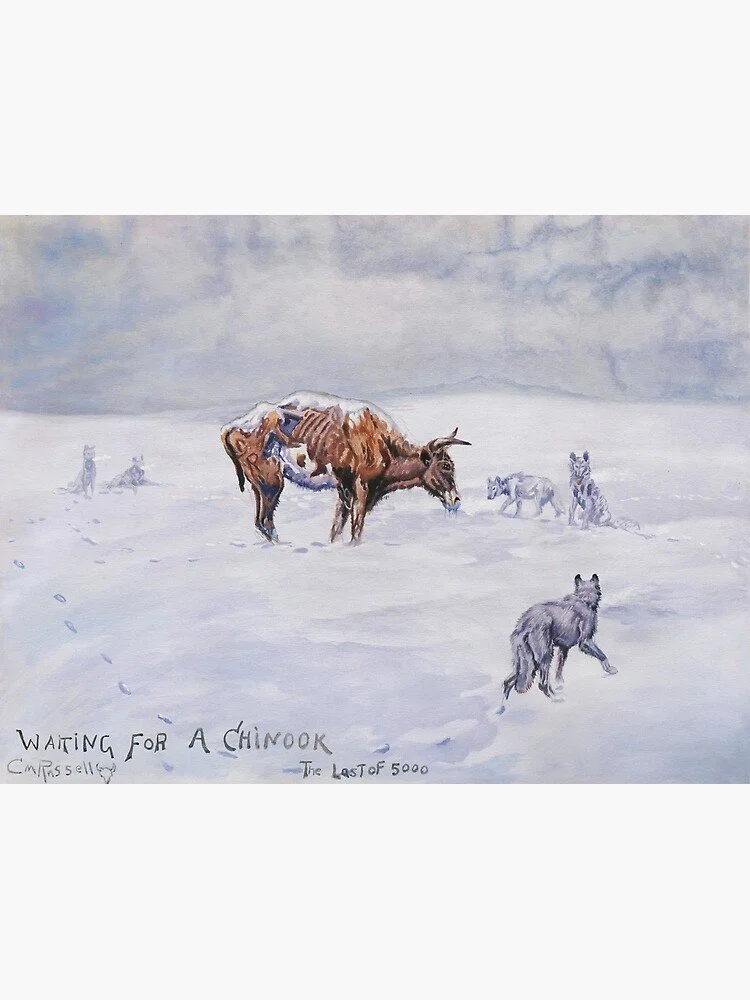
The Blizzard That Broke the West
This is the last of the herd, a survivor of the Great Die-Up, where winter claimed the open range. (Inspired by Charles M. Russell's "Waiting for a Chinook.")
By Trenten Kelley | The Broken Drum
Snow has fallen across northwest Colorado once again, dusting the fields, slowing the roads, and sending the familiar chill that reminds us who really calls the shots around here.
The season's first snow always stirs something ancient in the bones of the West. That primal awareness of how fragile our footing can be when the wind turns cold. But as ranchers toss another bale of hay and watch the sky gray over the Yampa, it's worth remembering a winter that nearly erased the frontier altogether.
The blizzard of 1886–87 was the one that broke the open range and changed the American West forever.
It began long before the snow. The summer of 1886 was cruel and dry across the Great Plains. Grass burned, rivers shrank, and pastures turned golden-brown. Yet optimism ran high among cattle barons who had flooded the plains with millions. They believed in mild winters, endless grass, and sheer luck. No hay was stacked for feed; no barns stood for shelter. The cattle were thin and scattered over land grazed bare. Then, in November the snow came and didn't leave.
By January, temperatures in Montana and the Dakotas hovered near sixty below. In Wyoming, horses froze where they stood, their manes stiff with ice. On January 9, 1887, the true killer arrived. A blizzard that raged for three straight days. Ranch hands later said you couldn't see fifty feet in any direction. Men who stepped off their horses sank waist-deep on flat ground. In towns across the northern plains, herds of starving cattle staggered down main streets, chewing fence posts and saplings, scavenging for anything edible.
The Chinook winds that usually brought brief reprieve did arrive for a day, melting the top crust of snow. But the cold that followed turned that melt into an impenetrable sheet of ice, sealing the grass, the cattle's only food, beneath it.
Temperatures plunged again, and the wind never stopped. Across the West, the range fell silent. When spring finally came, rivers clogged with carcasses, and the smell of rot carried for miles. Contemporary accounts described millions of cattle dead across the open range.
Ranchers and families who had built lives on the western frontier were wiped out overnight. The great Swan Land and Cattle Company of Scotland collapsed. Even Theodore Roosevelt, then a young rancher in the Dakota Badlands, lost most of his herd and much of his fortune. The open-range economy, once the pride of the frontier, died that winter.
In Colorado, the toll wasn't as catastrophic as in Montana or Wyoming, but it was far from merciful. Nearly a quarter of the cattle on the northern Front Range perished. Ranchers who survived changed their practices entirely: cutting hay, fencing land, and breeding smaller, hardier stock. The days of letting tens of thousands of cattle wander across unfenced prairie were over. The myth of open horizons and endless grass didn't survive the thaw.
By the next decade, the landscape of the West had transformed. Fences went up. Barns and windbreaks appeared where once there was only sky. The era of the open range was over, and the railroads, already expanding through Montana, Wyoming, and Colorado, took over the West. Along with all the people who took advantage of the suffering it brought.
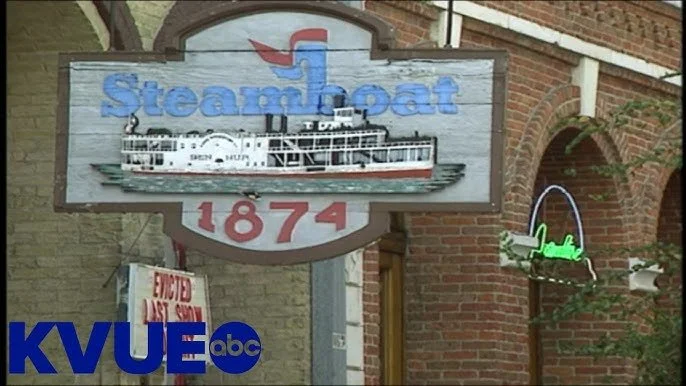
The Steamboat Connection: Austin's Rock Legacy Meets Colorado's Mountain Music Fest
"Steamboat" unites music worlds. Texas venue (1977-2003): Launched Stevie Ray, Garza, and more in historic digs. Steamboat springs The Music Fest (since 1986): Texas country jams amid slopes with Keen and Rogers. Coincidental harmony in adventure's name.
By Trenten Kelley | The Broken Drum
In the world of American culture, names can carry unexpected echoes across time and geography. "Steamboat" evokes images of paddlewheel vessels churning through rivers, symbols of adventure and progress in the 19th century. Yet, this evocative term has lent itself to two distinct music scenes separated by over 900 miles.
A legendary rock venue in Austin, Texas, and a thriving music festival in Steamboat Springs, Colorado. While there's no direct historical link between the two, the coincidence of their shared moniker and their roles in fostering vibrant, community-driven music experiences, offers a fascinating parallel. As we dive into their stories, we'll explore how both "Steamboats" have left indelible marks on their respective locales, with the Colorado fest marking its beginnings in a year that overlapped with Austin's heyday.
Austin's Steamboat: A Rock & Roll Beacon on Sixth Street
The story of Austin's Steamboat begins not with a river but with a historic building. Opened in late 1977 (or early 1978, depending on accounts) at 403 E. Sixth Street, Steamboat 1874, named for the year its Victorian limestone structure was built by lumberman Joseph Nalle. Steamboat quickly became a cornerstone of the city's live music scene. Transforming a former disco space into a no-frills rock club, it prioritized raw talent over drink specials, paying bands full door receipts and often guaranteeing $200 even for sparse crowds. This nurturing approach helped launch acts like David Garza, Ian Moore, Eric Johnson, the Scabs, Pushmonkey, Vallejo, Soulhat, and even captured Stevie Ray Vaughan's live album “In the Beginning”. Memorable moments abounded, comedians Bill Hicks and Sam Kinison sharpened their acts there, Gibby Haynes of the Butthole Surfers had infamous antics, and it hosted reunions like Joe Rockhead's final show in 1999.
The venue's logo, featuring a paddlewheel steamboat like the historic Ben Hur (an actual 1890s excursion boat on what was then Lake McDonald, now Lake Austin), tied into local Texas river history. Operated by the Lake Navigation Company, the Ben Hur symbolized leisure and exploration on the Colorado River, much like how the club embodied the "dangerous" edge of rock & roll in an era when Austin was transforming from a sleepy college town into a tech and music hub.
Nicknamed "The Boat," Steamboat thrived for 22 years on Sixth Street until eviction in 1999 due to rising rents and out-of-town developers. A victim of the city's boom. It briefly relocated to Riverside Drive in 2000, closing for good in 2003 after 26 total years. Today, its legacy lives on in Austin's music lore.
Steamboat Springs: From Trappers' Tales to Festival Fame
Shift northward to Colorado's Yampa Valley, where Steamboat Springs draws its name from a quirkier origin. In the 1860s, French fur trappers mistook the rhythmic chugging of a hot spring along the Yampa River for an approaching steamboat, despite the shallow waters making actual navigation impossible. This auditory illusion birthed the town's name, which stuck even after railroad blasts silenced the spring in 1908. Today, the resort town, known as "Ski Town USA," embraces this heritage with logos featuring stylized flags and mountain motifs, and it's home to over 150 mineral springs, ranching traditions, and world-class skiing.
Enter the music:
While Austin's Steamboat pulsed with electric guitars and late-night jams, Steamboat Springs found its melodic groove in a different genre. The MusicFest at Steamboat, an annual gathering of Texas/Red Dirt country artists, kicked off in 1986 as a modest group skiing trip with about 600 attendees.
Founded by John Dickson and friends, it evolved from informal jam sessions into a major event, now drawing thousands for six days of performances amid Champagne Powder snow. Not to mention a whole stage being built for the thousands of tourists brought in by airlines to Hayden. Artists like Robert Earl Keen, Randy Rogers Band, and Wade Bowen have become staples, with The Music Fest emphasizing "real music, real people" in intimate venues across the resort. In 2026, it celebrates its 40th anniversary from January 5-10, marking four decades of growth from those humble '80s beginnings.
A Coincidental Harmony: Music, Mountains, and Shared Spirits
Is there more than coincidence here? Chronologically, Austin's Steamboat was already a decade-old institution when Colorado's MusicFest launched in 1986, during a peak period for the venue with acts like the Arc Angels and Ugly Americans drawing crowds. Both share the affectionate nickname "The Boat," and their logos often incorporate steamboat imagery. Austin's with a literal paddlewheeler, Colorado's more abstract but evocative of adventure.
Thematically, they converge on music as a communal force: Austin's club nurtured rock rebels in an urban setting, while Steamboat Springs' fest fosters country troubadours against a backdrop of slopes and hot springs. No evidence suggests a direct inspiration. Dickson hailed from Texas music circles, not Austin's Sixth Street scene, but the overlap feels serendipitous, especially as both embody resilience amid change.
In an era where live music faces streaming and economic pressures, these "Steamboats" remind us of music's power to define places. Whether it's the echo of a guitar riff in a limestone hall or harmonies under cold Colorado skies, the name carries a legacy of discovery.
As Steamboat Springs gears up for its 40th MusicFest, perhaps it's time for Austinites to make a pilgrimage northward—or vice versa—to chase that shared spirit. After all, in the grand river of American culture, sometimes the currents connect in unexpected ways.
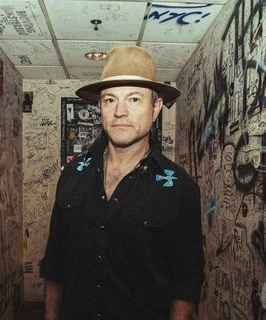
You Love Me Like That. Finding Light in a Vapor World
When I stood to marry my wife, I chose to be my own minister. Leaning on Ecclesiastes and a love song to remind me what really matters.
By Trenten Kelley | The Broken Drum
I knew the story I wanted told had to come from my own heart.
When I looked for what to say, I looked to a book that’s not easy or light but honest. Ecclesiastes. It opens with a line that sounds almost cynical:
“Vanity of vanities; all is vanity.”
That Hebrew word vanity really means vapor. Smoke. Here and gone. Solomon, the son of David, the king of Jerusalem, had it all. Wisdom, power, money, entertainment, legacy. And he said it still felt empty.
He tried what we all try when we’re searching. To get smarter, work harder, build bigger, party more, fill the silence with music, drink, wealth, relationships. Every road ended the same. “I considered all that my hands had done… and behold, all was vanity and a striving after wind.” He got what everyone says will make you happy and found out it didn’t.
Then, in a quiet moment, Solomon said something different:
“There is nothing better for a person than that he should eat and drink and find enjoyment in his toil. This also… is from the hand of God.” (Ecclesiastes 2:24)
Joy isn’t something you engineer; it’s something God gives. Meaning isn’t something you build, it’s something you receive.
And then comes that passage so many know:
“For everything there is a season, and a time for every matter under heaven…” (Ecclesiastes 3:1)
A time to weep and a time to laugh. A time to break down and a time to build up. A time to love. A time for peace. Even the hard things, the uncomfortable seasons, somehow, God uses them. “All things work together for good for those who love God, who are called according to His purpose.” (Romans 8:28)
That’s where faith comes in. “Without faith it is impossible to please God.” (Hebrews 11:6) You can’t always see the plan; you trust the Planner.
When I think about love in that world of vapor and seasons and mystery, I think about the song used for my wedding ceremony and inspiration: Adam Hood’s “You Love Me Like That.”
I don’t want no money, fortune or fame;
I don’t give a damn if the whole world remembers my name…
I just want a love that’s strong and true,
one soul in the world that knows what I’ve been through.
That’s what love is. Not the flashy, empty stuff Solomon warned about, but the quiet, fierce, undeserved grace that shows up and stays.
Paul describes it in words you’ve heard at weddings:
“Love is patient and kind; love bears all things, believes all things, hopes all things, endures all things. Love never ends.” (1 Corinthians 13:4–8)
I realized I didn’t need someone else to preach that for me. I’ve lived enough of the emptiness Ecclesiastes describes. I know enough of the seasons. I’ve found a love that’s “strong and true.” So I stood and became my own minister for my wedding.
Because what matters isn’t a perfect script. It’s the truth you’ve lived.
That’s why I made a new tradition for us. My family. I gave a candlestick. A simple, small, shining thing. Because life has dark rooms. Pride gets loud. Work gets heavy. Days get long. But if one of us can strike the match and spark the flame again, we’ll never be left alone in the dark.
So you’ll be my candle and I’ll be your spark…
Maybe we won’t leave each other alone in the dark.
That’s the promise. To hold the light for each other when the world feels meaningless. To keep choosing love when pride would rather win the argument. To trust God’s unseen purpose in every season.
Solomon ends Ecclesiastes saying:
“Fear God and keep His commandments… For God will bring every deed into judgment.” (Ecclesiastes 12:13–14)
It’s not a threat; it’s a promise. Your life, your love, matters. God sees it. And He’s the one who makes it last.
Don’t waste your life chasing vapor. Don’t measure your worth by noise, wealth, or winning. Receive joy as a gift. Build love that’s strong and true. Stand by each other through the long nights.
And light the candle when it goes dark.
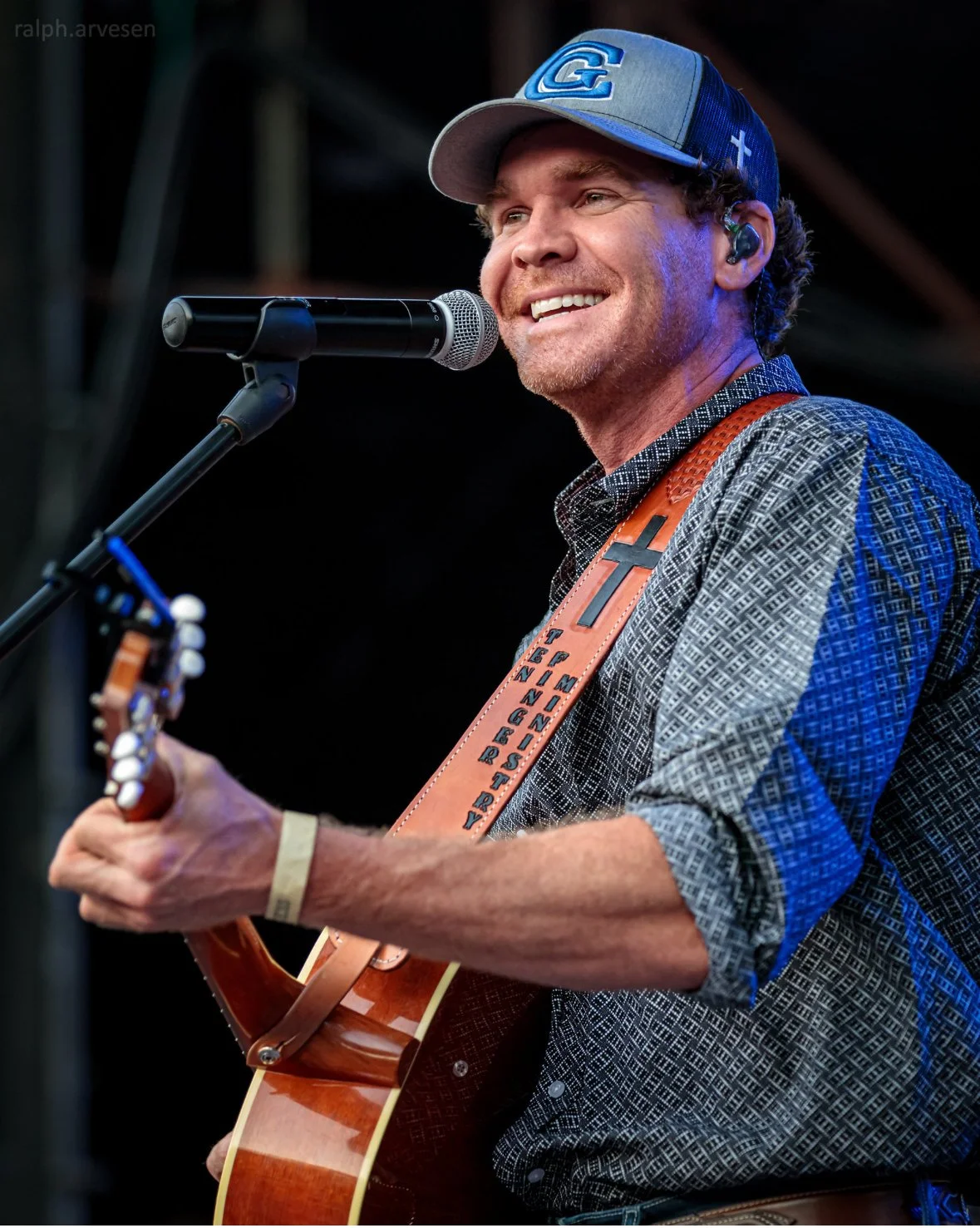
Right About Now: Pride, Irony, and the Cost of Being Right
Charlie Kirk once said: “The Bible is the most powerful, significant, and important book of all time… answers to every challenge you will face.”
In honor of Charlie Kirk’s persistence in sharing God’s Word, every Sunday I’ll be posting a Broken Drum Devotional. A reflection that ties together a song, scripture, and a story.
We need role models, people willing to live with humility, courage, and faith. Charlie was one for me, and I pray I can carry that forward for others.
By Trenten Kelley | The Broken Drum
Country music has a way of telling on us. It’s honest. It sings about heartbreak, mistakes, joy, and regret. Curtis Grimes, a Texas native, husband, father, and award-winning country artist, has lived enough of it to know what he’s singing about.
Grimes’s story is one of second chances. Once a rising star chasing the party scene, he hit a breaking point where he realized he had all the success but none of the peace. In his words, he was “a horrible representation of a Christian” until a gospel song on the radio reminded him that God hadn’t given up on him. He rededicated his life, reshaped his music, and now uses his platform to share hope through faith-based country. He’s earned chart-topping singles and Texas Country Music Association awards, but more importantly, he’s found purpose: to encourage people with songs that point to grace, redemption, and truth.
His track “Right About Now” is the perfect example. On the surface, it’s about a man who won an argument but lost the woman he loved. He “stood on principle,” made his case, “litigated” and he was right. But while he’s at home polishing his pride, she’s “out on the town,” and by the end, he’s left with nothing but the hollow taste of victory.
It’s ironic, it’s heartbreaking, and it’s profoundly biblical.
The Irony of Pride
• “Pride goes before destruction, and a haughty spirit before a fall.” (Proverbs 16:18)
• “One’s pride will bring him low, but he who is lowly in spirit will obtain honor.” (Proverbs 29:23)
Pride feels strong. It feels like standing your ground. But the Bible warns us that pride doesn’t lift us up, it brings us low. The man in the song is right in the argument, but wrong in the relationship. The irony is that his victory cost him everything he actually wanted.
The Wisdom of Humility
• “God opposes the proud but gives grace to the humble.” (James 4:6)
• “Whoever exalts himself will be humbled, and whoever humbles himself will be exalted.” (Matthew 23:12)
Humility doesn’t mean you’re weak. It means you value love more than your ego. Sometimes the strongest words you can speak in a marriage or relationship are the hardest: I’m sorry.
The world tells us to “stick to our guns.” Jesus tells us to lay them down and pick up grace.
Arguments That Don’t Heal
• “A soft answer turns away wrath, but a harsh word stirs up anger.” (Proverbs 15:1)
• “Be angry and do not sin; do not let the sun go down on your anger, and give no opportunity to the devil.” (Ephesians 4:26–27)
The man in the song made a solid case — “you sure told her, ha, yeah you did.” But what did it fix? Nothing. His words were sharp enough to win the fight but not soft enough to heal the heart. Scripture reminds us that a gentle answer can do far more than a clever argument.
The Cost of Being Right
• “Be not quick in your spirit to become angry, for anger lodges in the heart of fools.” (Ecclesiastes 7:9)
Here’s the bitter irony: you can win the battle and lose the war. You can be right and still be wrong. You can cling to pride and end up alone. The song paints the picture: while he’s proud of his stand, she’s gone, and his pride becomes the loneliest company in the world.
The Gospel Remedy
The irony of Curtis Grimes’ song is also the irony of the gospel. We thought strength was in pride, but Jesus showed strength in humility. We thought life was found in holding on, but Jesus showed life comes in letting go.
In marriage, in friendship, in faith, the truth is the same:
• Pride will cost you more than it gives.
• Humility will bless you more than it costs.
• And sometimes the best way to be “right” is to choose love over being right.
So the next time you feel like sticking to your guns, remember. Jesus laid down His life, not because He was wrong, but because He was right, and He loved us more than His pride.
Beyond the Song: A Life of Faith
Curtis Grimes’s life is itself a testimony. He’s a singer, songwriter, husband, and father who decided that no amount of spotlight was worth losing his soul. In choosing to honor God, he found true success. Not just in music charts, but in a meaningful life that impacts others for good.
Another of his songs, “Noah Built a Boat”, captures the spirit of stepping out in faith. It challenges us to ask: What “boat” is God calling me to build? Maybe it’s a dream you’ve put off, a relationship you need to repair, or a new direction entirely. Whatever it is, if God is in it, don’t let doubt or naysayers stop you. When God opens a door, He’ll lead you through. You just have to take that first step.

Where Have All the Average People Gone
The countdown to Music Fest is on, and I can’t help but think back to when I first heard Danno Simpson cover Roger Miller’s “Where Have All the Average People Gone.” It was 2022 at Shmiggity’s in Steamboat. The kind of moment that sticks with you for life. By 2025, I had the chance to video his version at MusicFest, and it still brings me to tears.
By Trenten Kelley | The Broken Drum
“Where Have All the Average People Gone” - Roger Miller, as covered by Danno Simpson.
The first time I heard this song wasn’t from Roger Miller. It was in 2022, at Shmiggity’s in Steamboat Springs, or “home for now,” as I like to call it, even though I was born and raised in the Yampa Valley. It wasn’t the original either. It was Danno Simpson, live, at a pre‑Music Fest show. You know, before the week‑long Texas fiasco full of drunkards, poets, and some of the most down‑home, amazing people who turn Steamboat into a musical paradise.
The Music Fest has been my favorite time of year in the valley, maybe all year, since I first realized it even existed. Honestly, I was pissed nobody in my family or community ever told me about it sooner. But all it took was a pair of skis just good enough to mount some pawn‑shop boots, and I was off with my buddies. I’ve been making it a priority ever since.
Around here, locals call it “Texas Week.” People get fired up. You can feel it in the air. Or maybe that's just the knowing of what’s to come. For me? I was hooked. From my first Ragweed show at the Steamboat Springs free concert series, learning about the magic of music through Cody Canada, to screaming my lungs out to Danno at The Music Fest, I’ve been in love with it ever since.
Danno’s from Fort Collins, though you’d never guess it by listening. He’s got that rare gift. The ability to completely capture a crowd. In one set he’ll cut deep with a murder ballad (The Final Stand of Henry Lee), bring a grown man to tears with the only song ever written about the irrigation industry (Honest Work), then make you reflect on how damn fast the (Days gone By). By the end of the set, you feel like you’ve lived a lifetime and you’ve never had more fun doing it.
Fast‑forward to The Music Fest 2025, when I finally got the chance to video his cover of “Where Have All the Average People Gone.” Before he played it, Danno told the story of how he first heard the song, sitting in a fast‑food drive‑through, where it hit him so hard he broke down in tears.
Roger Miller’s version has that upbeat, almost playful tone. But when Danno sings it, you hear something different. His delivery carries a desperation that makes the lyrics feel raw and urgent. He slowed it down, made every word count, and somehow turned it into something uniquely his own. Without losing what made the original great.
He damn sure brought me to tears that first night in 2022, and I’ve requested it at his shows ever since.
https://youtu.be/GYSD-62_XsE?si=LkAfMOBXISvqrLd7
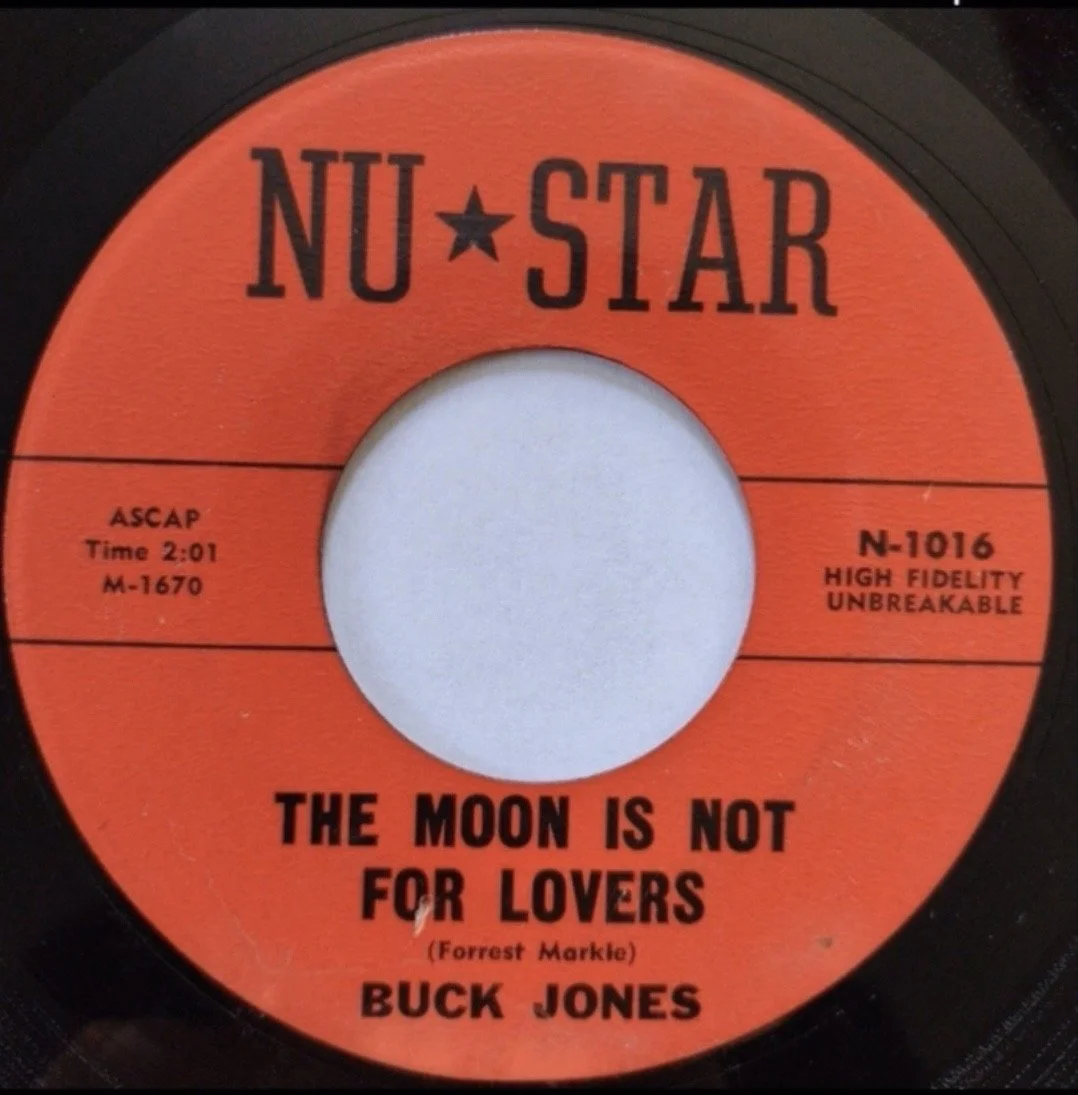
The Broken Drum Still Beats: Honoring My Great-Grandpa, Forrest Markle
Forrest Markle ran Hayden Colorado’s Broken Drum Café while serving as mayor, and still found time to write a song after the moon landing. A reminder that his curiosity lives on in the stars.
By Trenten Kelley | The Broken Drum
When I started Artful Imagination Endeavors, I wasn’t exactly sure what it would become. What I did know was that I wanted it to be a place to share stories, music, art, and inspiration from the many wonderful people in this world. As I search for a way to begin, I realize the best place to start is with my own roots. With the story of my great-grandpa, Forrest Markle.
Forrest wasn’t just a name in our family history. He was the mayor of Hayden, Colorado, in the late 1960s and ’70s, a man who poured his heart into his community. Alongside his wife, Margery, he ran The Broken Drum Café, a local gathering place known for good meals, conversation, and the kind of small-town connection that seems rarer with each passing year.
His legacy doesn’t stop at public service and community building. Forrest also wrote a song called The Moon is Not for Lovers, recorded by Buck Jones after the Apollo moon landing. Its lyrics captured a powerful feeling at the time. That the moon had shifted from being a symbol of mystery and romance to something cold, scientific, and distant. Yet the song reminds us that even as rockets reach new heights, we should never lose the wonder that made us look up at the night sky in the first place.
Artful Imagination Endeavors is my way of carrying that spirit forward. The name The Broken Drum for my dream project isn’t just a nod to the café Forrest and Margery once ran. It’s a tribute to a man whose story, service, and creativity continue to inspire me.
Here’s to keeping the wonder alive.